
Here's what couples should know before choosing a private villa, boutique hotel, or non-all-inclusive wedding venue.
You've decided on a destination wedding. You want beautiful surroundings, meaningful time with your favorite people, and a celebration that feels like the two of you.

Nobu Los Cabos wedding reception
But every time you search for destination wedding venues, you seem to find the same thing: all-inclusive resorts, wedding packages, and a list of what's included. And while some of those resorts are wonderful, you may be wondering whether there's another way to have the wedding you envision.
There is.
A destination wedding can take place at a private beachfront estate, a boutique hotel, a historic property, or a beautiful resort that doesn't operate on an all-inclusive model. The possibilities extend well beyond traditional wedding packages.
But here's something important to understand before you start requesting proposals: More flexibility doesn't necessarily mean less planning. In many cases, it means making more decisions, and making them earlier.
All-inclusive versus non-all-inclusive: what's the difference?
At an all-inclusive resort, your guests typically pay for accommodations that include meals, beverages, and certain amenities. Many resorts also offer wedding packages that bundle selected ceremony and reception services. That structure can make planning easier, particularly when your guests are traveling together.
A non-all-inclusive venue operates differently.
You might reserve a block of rooms at a boutique hotel, host your ceremony on a private terrace or lawn and then arrange a reception with a customized menu. Or you might rent a private estate and bring together a team of local wedding professionals to create a wedding only dreams are made of. Neither approach is automatically better.
The difference is how the celebration is organized, what the venue provides, and which responsibilities remain with you and your planning team.
1. Start with the wedding experience, not the venue photographs
One of the first questions I encourage couples to consider is what they want their wedding to feel like. Not just what it should look like.
Do you want everyone staying together at one resort, enjoying activities throughout the weekend?
Would you prefer a private estate where your closest family and friends can gather for a more intimate celebration?
Are you envisioning a ceremony overlooking the ocean, followed by dinner under the stars with a menu created specifically for your guests?
Or do you want the atmosphere of a beautiful boutique hotel, where your guests can take over the property and enjoy the destination independently between wedding events?
Each of these experiences requires a different planning approach. A venue can be stunning and still be the wrong choice for your celebration.
That's why choosing a destination wedding venue should involve more than comparing galleries and wedding packages. You also need to evaluate how the property functions, how guests will experience it, and whether it can support the wedding you actually want.
2. Understand what the venue is really providing
When reviewing a wedding proposal, pay attention to what's included and what's not. A venue might provide ceremony space, tables, chairs, catering, and an on-site event coordinator. Another property may offer the setting but require you to arrange nearly everything else.
Before committing, ask about:
Venue rental fees, food and beverage minimums, taxes, and service charges
Outside vendor policies and any additional fees
Ceremony and reception setup, breakdown, and access times
Indoor alternatives and weather contingency plans
Music restrictions, event end times, and privacy
Accommodations, room blocks, and minimum-stay requirements
Transportation and accessibility for guests
These are not simply administrative details. They determine whether your wedding vision is feasible and what it will take to execute it.
A beautiful outdoor reception means very little if the venue cannot accommodate your guest count, requires music to end earlier than expected, or has no backup space in case of rain.
3. Look at the complete wedding investment
It's easy to compare the starting price of a wedding package with the rental fee for a private estate and assume you know which option costs more. But those numbers rarely tell the whole story.
For a non-all-inclusive wedding, the overall investment may include the venue, catering, bar service, rentals, floral design, lighting, entertainment, planning, staffing, transportation, and other event-specific services. A lower venue rental fee doesn't necessarily mean a lower total wedding cost.
The same applies to an all-inclusive resort. A wedding package may include the ceremony basics while charging separately for a private reception, upgraded décor, entertainment, and additional guests. You also need to consider the costs your guests will incur. A destination wedding should be evaluated through two separate financial lenses: what the couple is investing in the celebration and what guests will spend to attend. Those numbers influence one another, but they are not the same.
The goal isn't to choose whichever venue advertises the lowest starting price. It's to understand the complete financial picture before signing a contract.
4. Anguilla is a beautiful example of what's possible.
If you're drawn to the Caribbean but want something different from the traditional all-inclusive wedding experience, Anguilla deserves consideration. The island offers distinctive beachfront resorts, private estates, and intimate wedding settings. It is one of my favorite islands.
For example, Four Seasons Resort and Residences Anguilla offers beachfront and other event settings for wedding celebrations. Quintessence offers an intimate garden celebration, while Zemi Beach House provides wedding options along Shoal Bay East.
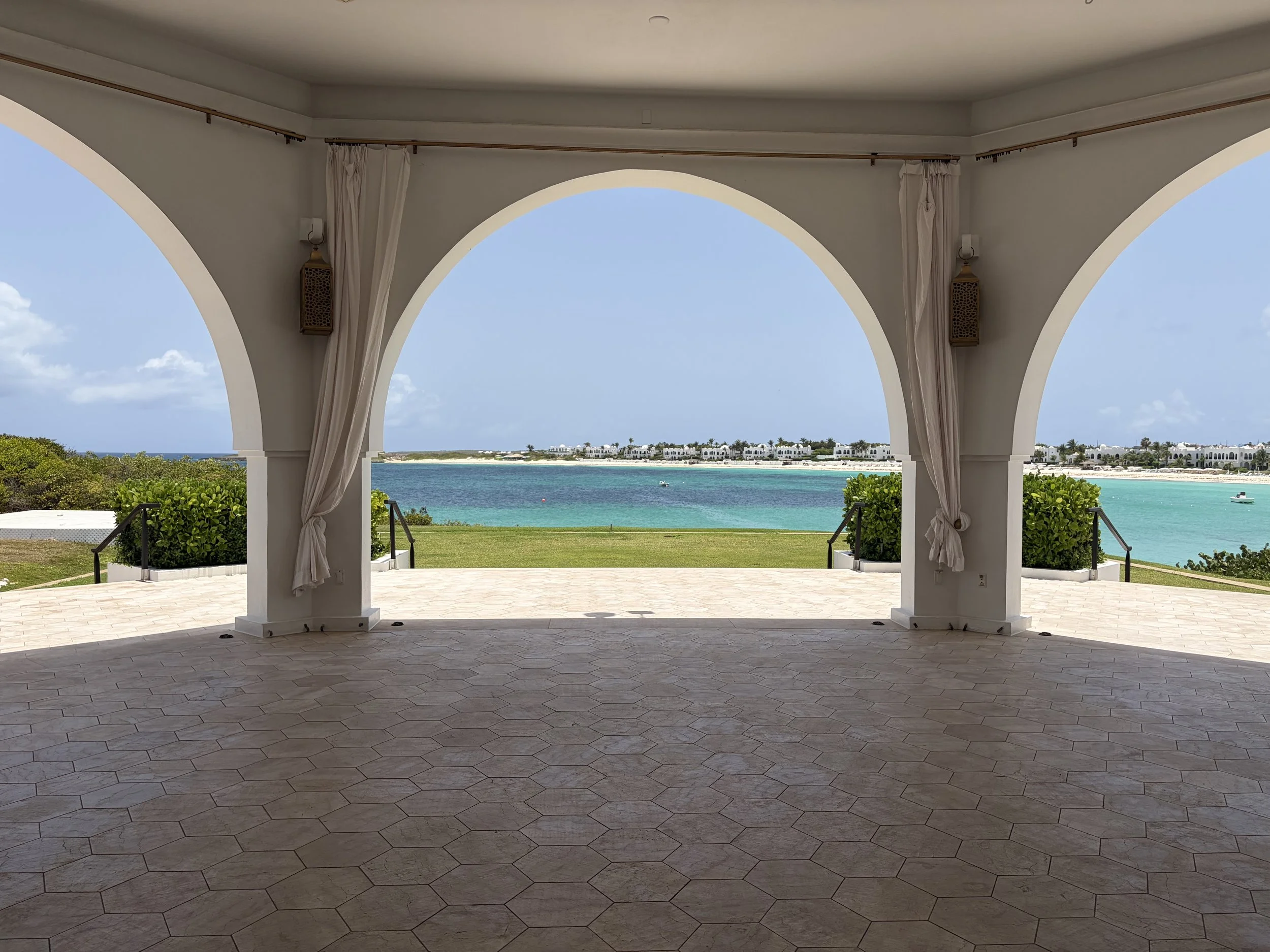
Cap Juluca Wedding Pavilion- Anguilla
These properties illustrate how different two weddings on the same island can feel. One couple might want a full wedding weekend at a resort, with a welcome dinner and farewell brunch. Another might prioritize an intimate ceremony, exceptional dining, and plenty of unstructured time for guests to explore.
The right choice depends on your guest count, priorities, available investment, and the experience you want to create.
And before falling in love with any particular property, it's important to verify current wedding availability, event restrictions, accommodation arrangements, and the complete proposal.
5. Your guests' travel experience is part of the wedding plan
One of the most overlooked parts of destination wedding planning happens before the wedding day. It's getting everyone there.
For example, guests traveling to Anguilla may arrive through the island's airport or travel through neighboring St. Maarten/St. Martin and continue by ferry or a private charter. That creates questions that need answers well before guests begin booking flights.
Which arrival options make the most sense?
How much connection time should guests allow?
Will transfers be arranged?
What happens if someone arrives after the planned transfer service?
And once guests arrive, how will they get between their accommodations and the wedding venue?
These are the kinds of details that can turn a beautiful wedding weekend into an unnecessarily stressful experience if they're overlooked. Thoughtful guest travel planning means anticipating those questions, communicating clearly, and creating a realistic arrival and departure plan.
Your guests shouldn't have to figure everything out on their own. That’s why you hire help!
6. A venue coordinator and your wedding planner are not necessarily doing the same job
This is one of the most important distinctions couples should understand. A venue's wedding coordinator can be an excellent resource. They know the property, understand its operations, and manage the services the venue has agreed to provide. They are you BFF when it comes to the resort or venue.
But their responsibilities are defined by the venue and its contract.
An independent wedding planner represents the couple's broader wedding interests, which may include evaluating venues, reviewing proposals, coordinating outside vendors, managing the planning and day of timelines, and overseeing the overall wedding experience.
When your wedding also involves international travel, guest accommodations, and transfers, additional expertise becomes especially valuable. The key is to clarify who is responsible for what.
The one thing you don't want is to discover on your wedding day that everyone thought someone else was handling an important detail.
7. Is a non-all-inclusive destination wedding right for you?
A non-all-inclusive venue may be a strong fit if you value a distinctive setting, want greater flexibility in the design of your celebration, or prefer a wedding experience that doesn't revolve around a traditional resort package.
It may also make sense when you want to incorporate local dining or off-property venues, a private estate, or a multi-location wedding weekend.
But if your priority is having everyone together at one property with meals and activities conveniently included, an all-inclusive resort may be the better choice.
There is no single right destination wedding model. There is only the approach that best supports your priorities, your guests, and the celebration you want to have. And figuring that out is where experienced professional guidance makes a difference.
Before you choose your destination wedding venue
You don't need to spend another six months comparing resorts and wondering whether you're missing a better option.
You need a clear understanding of what's possible, what it will cost, and what each decision means for your wedding experience.
At Blissfully Demure Journeys, we combine wedding planning expertise, firsthand destination knowledge, venue evaluation, and guest travel guidance to help couples make confident decisions.
From all-inclusive resort weddings to private estates and distinctive venues, both domestically and internationally, we bring the celebration and travel experience together.
Ready to explore what your destination wedding could look like?
Schedule a complimentary destination wedding consultation and let's talk about your vision, your priorities, and the options worth considering.
We've got you!
